


 Python
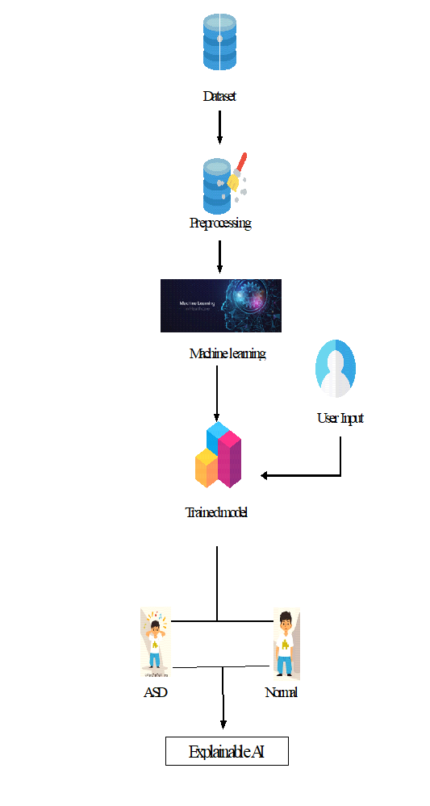
A Clinically Interpretable Approach for Early Detection of Autism Using Machine Learning with Explainable AI

A Deep Learning Ensemble With Data Resampling for Credit Card Fraud Detection
Aim:
People can use credit cards for online transactions as it provides an efficient and easy-to-use facility. With the increase in usage of credit cards, the capacity of credit card misuse has also enhanced. Credit card frauds cause significant financial losses for both credit card holders and financial companies. The main aim is to detect fraudulent transactions using credit cards with the help of ML algorithms and deep learning algorithms.

A Machine Learning Framework for Early-Stage Detection of Autism Spectrum Disorders

A Modular Ice Cream Factory Dataset on Anomalies in Sensors to Support Machine Learning Research in Manufacturing Systems

Clinically Applicable Machine Learning Approaches to Identify Attributes of Chronic Kidney Disease (CKD) for Use in Low-Cost Diagnostic Screening

Comparative Analysis of Customer Loan Approval Prediction using Machine Learning Algorithms

Comparative Analysis Study for Air Quality Prediction in Smart Cities Using Regression Techniques

Data-Driven Early Diagnosis of Chronic Kidney Disease: Development and Evaluation of an Explainable AI Model

Early Detection of Childhood Malnutrition using Survey Data and Machine Learning Approaches

Evasion Attacks and Defense Mechanisms for Machine Learning-Based Web Phishing Classifiers

Hyphatia: A Card-Not-Present Fraud Detection System Based on Self-Supervised Tabular Learning
Aim:
To develop a fraud-detection system that learns patterns directly from transaction data without relying on labels. Captures differences between legitimate and fraudulent activity using an unsupervised representation-learning approach. It improve fraud-spotting accuracy by training simple classifiers on these learned representations instead of raw features.
