Welcome to Final Year Projects!!
  • Newsletter
  • +91 90254 34960
  • Contact Us
  • FAQs
Select category
  • Select category
  • Artificial Intelligence
  • Biomedical
  • Block Chain
  • Cloud Computing
  • Cyber Security
  • Data mining
  • Deep Learning
  • Embedded Components
  • Generative AI
  • IoT
  • LORA
  • Machine Learning
  • Mini Projects
    • Embedded
    • Java
    • Matlab
    • Python
    • VLSI
      • pipeline
  • Natural Language Processing
  • Projects
    • Embedded
      • Agriculture
      • Artificial Intelligence(AI)
      • Biomedical
      • Digital Twin
      • Federated Learning
      • Image Processing
      • Internet of Things(IoT)
      • LoRaWAN
      • Python Interface
      • Raspberry PI
      • Robotics
      • Social Cause
      • Wireless Sensor Network
    • Java
      • Android
      • Artificial Intelligence
      • Augmented Reality
      • Blockchain
      • Cloud Computing
      • Cybersecurity
      • Data Mining
      • Internet of Things (IoT)
      • Machine Learning
      • Secure Computing
      • Social Cause
    • Matlab
      • Cryptography- Authentication
      • Cyber Security
      • Deep Learning
      • Digital Image Processing
      • Machine Learning
      • Natural Language Processing
    • Python
      • Agent AI
      • Blockchain
      • Cybersecurity
      • Deep Learning
      • Explainable AI
      • Federated Learning
      • Generative AI
      • GPT
      • Graph Neural Network
      • Machine Learning
      • OpenCV
      • Quantum Encryption
      • Reinforcement Learning
    • VLSI
      • Low Power VLSI Design
      • On-Chip Cryptography
      • Self Repairing Technology
  • Robotics
  • Secure Computing
Login / Register
0 Wishlist
0 Compare
0 items ₹0.00
Menu
0 items ₹0.00
Browse Categories
  • Java
  • Python
  • Embedded
  • Machine Learning
  • Mechanical
  • Matlab
  • VLSI
  • Raspberry PI
  • Artificial Intelligence
  • Home
  • Shop
    • PROJECTS
      • PROJECTS
        • Java
        • Python
        • Embedded
        • Matlab
        • VLSI
        • Mechanical
    • MINI PROJECTS
      • PROJECTS
        • Java
        • Python
        • Matlab
        • VLSI
        • Embedded
    • WORKSHOPS
      • Workshops
        • Python
        • Robotics
        • Industry Visit
        • Raspberry Pi
        • Image Processing
        • Mechanical Engineering
        • VLSI
        • Arduino
        • Matlab
        • Machine Learning
        • Embedded
        • Android
        • IoT
    • INTERNSHIPS
      • Internships
        • Python
        • Machine learning
        • Artificial intelligence
        • Web development
        • Android
        • IoT / internet of things
        • Cloud Computing
        • Digital Marketing
        • Big Data
  • Journal paper
  • Blog
  • About us
  • Contact us
Click to enlarge
Home Projects Python Identifying Fraudulent Credit Card Transactions Using Ensemble Learning
Smart E-Commmerce App using AR to Visualize Products in Realtime on Android
Smart E-Commmerce App using AR to Visualize Products in Realtime on Android ₹5,500.00
Back to products
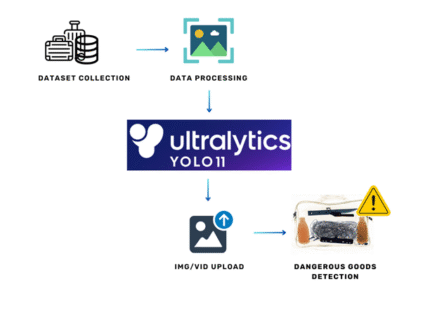
A Novel Dangerous Goods Detection Network Based on Multi-Layer Attention Mechanism in X-Ray Baggage Images
A Novel Dangerous Goods Detection Network Based on Multi-Layer Attention Mechanism in X-Ray Baggage Images ₹5,500.00

Identifying Fraudulent Credit Card Transactions Using Ensemble Learning

₹5,500.00

Aim:

People can use credit cards for online transactions as it provides an efficient and easy-to-use facility. With the increase in usage of credit cards, the capacity of credit card misuse has also enhanced. Credit card frauds cause significant financial losses for both credit card holders and financial companies. Fraudulent activities often go unnoticed due to the complexity of transaction behaviors and the adaptability of fraudsters. The main aim of this study is to detect fraudulent transactions using credit cards with the help of ML algorithms and deep learning algorithms. By implementing advanced techniques such as CatBoost and CNN, we aim to improve fraud detection accuracy and minimize false positives. The research also focuses on dataset balancing, feature extraction, and performance evaluation to ensure the model’s robustness. By integrating these methods, we seek to enhance security and provide an efficient solution for real-world credit card fraud detection.

Watch Product Video
Compare
Add to wishlist
Categories: Cybersecurity, Python Tags: CatBoost, CNN, Credit Card Fraudulent, Cyber security, Deep Learning, Naive Bayes, Python Projects, Random Forest Classifier, XGBoost
Share:
  • Description
  • Reviews (0)
  • Software Download
  • Download Abstract
  • Shipping & Delivery
Description

Aim:

Ā  Ā  Ā  Ā  Ā  Ā  Ā People can use credit cards for online transactions as it provides an efficient and easy-to-use facility. With the increase in usage of credit cards, the capacity of credit card misuse has also enhanced. Credit card frauds cause significant financial losses for both credit card holders and financial companies. Fraudulent activities often go unnoticed due to the complexity of transaction behaviors and the adaptability of fraudsters. The main aim of this study is to detect fraudulent transactions using credit cards with the help of ML algorithms and deep learning algorithms. By implementing advanced techniques such as CatBoost and CNN, we aim to improve fraud detection accuracy and minimize false positives. The research also focuses on dataset balancing, feature extraction, and performance evaluation to ensure the model’s robustness. By integrating these methods, we seek to enhance security and provide an efficient solution for real-world credit card fraud detection.

Abstract:

Ā Ā Ā Ā Ā Ā Ā Ā Ā Ā Ā  Credit card fraud is a growing challenge for financial institutions and consumers. The main focus of this research is to apply recent advancements in deep learning and machine learning algorithms for detecting fraudulent credit card transactions. A comparative analysis of both machine learning and deep learning techniques was performed to determine their effectiveness in fraud detection. The study utilizes a credit card fraud dataset to evaluate various models, aiming to improve detection accuracy while minimizing false positives and false negatives. A machine learning algorithm, CatBoost, was first applied to the dataset to enhance fraud detection performance. CatBoost efficiently handles categorical data and missing values, making it well-suited for structured financial transaction datasets. It provides faster training times and improved interpretability, helping to detect fraudulent activities accurately. Later, a convolutional neural network (CNN) was implemented to further improve fraud detection accuracy by capturing intricate patterns in transaction sequences. The CNN model employs multiple convolutional layers, batch normalization, dropout layers, and fully connected layers to extract key features from transaction data. A comprehensive empirical analysis was conducted by optimizing the number of hidden layers, epochs, and hyperparameters to achieve the best possible results. The evaluation metrics, including accuracy, precision, recall, and F1-score, show significant improvements in fraud detection compared to traditional methods. The integration of CatBoost and CNN outperforms existing machine learning and deep learning algorithms, making it a robust approach for credit card fraud detection. Additionally, data balancing techniques were applied to address class imbalance issues, ensuring that fraudulent transactions were adequately represented during model training. The proposed hybrid model can be effectively implemented in real-world financial systems, offering enhanced security and reducing financial losses. The study highlights the potential of combining machine learning and deep learning approaches to develop a more efficient and accurate fraud detection system.

Ā 

Proposed System:

Ā  Ā  Ā  Ā  Ā Deep learning (DL) and machine learning (ML) algorithms are applied in various domains, including fraud detection. In this model, we explore DL and ML algorithms to identify credit card fraud in the banking industry. It uses a combination of deep learning (CNN) and machine learning (CatBoost) algorithms for detecting CCF. CatBoost is a powerful gradient boosting algorithm specifically designed to handle categorical data efficiently. It provides faster training times and improved accuracy compared to traditional tree-based models. The CNN model and its layers are used to analyze transactions and determine whether they are fraudulent or normal. CNN excels at capturing intricate patterns in transaction sequences and anomaly detection. By combining both CatBoost and CNN, the proposed model leverages the strengths of both machine learning and deep learning methodologies. The model is designed to adapt to real-world fraudulent behaviours, making it robust against evolving fraud strategies. Extensive experiments are conducted to evaluate the model’s performance using various performance metrics, including accuracy, precision, recall, and F1-score. The integration of both approaches enhances fraud detection accuracy and reduces false positive rates.

Advantage:

  1. The hybrid approach leverages CNN’s ability to capture complex transaction patterns and CatBoost’s efficiency with structured categorical data, resulting in higher overall detection accuracy.
  2. CatBoost’s optimized gradient boosting algorithm reduces training time compared to traditional ensemble methods, while CNN’s parallel computation accelerates pattern learning.
  3. The hybrid model can be scaled for large transaction datasets and integrated into real-time fraud detection systems for proactive prevention.
  4. Combining both models helps minimize misclassifications of legitimate transactions as fraudulent, improving customer trust and operational efficiency.
Reviews (0)

Reviews

There are no reviews yet.

Be the first to review “Identifying Fraudulent Credit Card Transactions Using Ensemble Learning” Cancel reply

Your email address will not be published. Required fields are marked *


The reCAPTCHA verification period has expired. Please reload the page.

Software Download

You must be logged in to download the software.

Download Abstract

You must be logged in to download the abstract.

Shipping & Delivery
wd-ship-1
wd-ship-2

MAECENAS IACULIS

Vestibulum curae torquent diam diam commodo parturient penatibus nunc dui adipiscing convallis bulum parturient suspendisse parturient a.Parturient in parturient scelerisque nibh lectus quam a natoque adipiscing a vestibulum hendrerit et pharetra fames nunc natoqueĀ dui.

ADIPISCING CONVALLIS BULUM

  • Vestibulum penatibus nunc dui adipiscing convallis bulum parturient suspendisse.
  • Abitur parturient praesent lectus quam a natoque adipiscing a vestibulum hendre.
  • Diam parturient dictumst parturient scelerisque nibh lectus.

Scelerisque adipiscing bibendum sem vestibulum et in a a a purus lectus faucibus lobortis tincidunt purus lectus nisl class eros.Condimentum a et ullamcorper dictumst mus et tristique elementum nam inceptos hac parturient scelerisqueĀ vestibulum amet elit ut volutpat.

Related products

Compare

BERT-Residual Quantum Language Model Inspired by ODE Multi-Step Method

Python, Agent AI
₹5,500.00

Aim:

Ā  Ā  Ā  Ā  Ā To design and develop a hybrid GPT + Quantum-Inspired language model that effectively distinguishes between human-written and AI-generated text using contextual embeddings and quantum-style measurement operators.

Add to wishlist
Add to cart
Quick view
Compare

Deep Learning Model for Driver Behavior Detection in Cyber-Physical System-Based Intelligent Transport Systems

Python, Deep Learning, Projects, Artificial Intelligence, Deep Learning
₹5,500.00
Aim: To develop a real-time system for detecting and alerting drowsiness in drivers using YOLOv8 object detection.
Add to wishlist
Add to cart
Quick view
Compare

Online Recruitment Fraud (ORF) Detection Using Deep Learning Approaches

Python, Deep Learning, Projects, Artificial Intelligence, Deep Learning
₹5,500.00
Aim: To propose an advanced fraud detection system for online job postings by utilizing a transformer-based machine learning model, BERT, to enhance the detection of fraudulent job listings and improve the security of online recruitment platforms.
Add to wishlist
Add to cart
Quick view
Compare

Predicting Market Performance Using Machine and Deep Learning Techniques

Python, Deep Learning, Deep Learning
₹5,500.00
The aim of this study is to evaluate the effectiveness of various machine learning and deep learning algorithms, including LSTM networks, ARIMA models, and traditional machine learning techniques, for forecasting market prices. We analyze the performance of these models on stock historical datasets and compare their predictive accuracy to determine the most suitable approach for real-time market analysis. This research seeks to provide insights into the predictability of markets and support informed decision-making for investors
Add to wishlist
Add to cart
Quick view
Compare

Predictive Analysis of Network based Attacks by Hybrid Machine Learning Algorithms

Python, Machine Learning, Projects, Machine Learning
₹5,500.00
To enhance DDoS attack detection by implementing a machine learning system with hyper-parameter optimization and advanced prediction techniques
Add to wishlist
Add to cart
Quick view
Compare

Real-Time Plant Disease Dataset Development and Detection of Plant Disease Using Deep Learning

Python, Deep Learning, Projects, Artificial Intelligence, Deep Learning
₹5,500.00
Aim: The primary aim of this project is to develop an advanced plant disease detection system that leverages state-of-the-art deep learning architectures, such as ResNet152V2 and EfficientNetV2B3, to achieve higher accuracy, scalability, and efficiency.
Add to wishlist
Add to cart
Quick view
Compare

Toward Improving Breast Cancer Classification Using an Adaptive Voting Ensemble Learning Algorithm

Python, Machine Learning, Projects, Artificial Intelligence, Machine Learning
₹5,500.00
Aim: The primary aim of this study is to develop a robust and accurate auxiliary diagnostic system for breast cancer by integrating machine learning techniques with a hybrid strategy.
Add to wishlist
Add to cart
Quick view
Compare

Uncertain Facial Expression Recognition via Multi-Task Assisted Correction

Python, Deep Learning, Deep Learning
₹5,500.00
The aim of this research is to develop a robust and accurate facial expression recognition system that addresses the challenges posed by uncertain and ambiguous data. We aim to improve upon existing methods to enhance feature representation learning and uncertainty mitigation.
Add to wishlist
Add to cart
Quick view

    Global Techno Solutions - GTS, started by young engineering graduates to overcome a problem they faced during their academic years. That is "Providing Solutions". They kept it as the motto for their company.

    • Phone: (+91) 90254 34960
    • Mail: sales@finalyearprojects.in
    Our Category
    • Java
    • Python
    • Embedded
    • Matlab
    • VLSI
    • Mechanical
    USEFUL LINKS
    • Privacy Policy
    • Returns
    • Terms & Conditions
    • Contact Us
    • Latest News
    • FAQ
    Mini Projects
    • Java
    • Python
    • Embedded
    • Matlab
    • VLSI
    Copyright Finalyearprojects.In 2024
    payments
    • Menu
    • Categories
    • Java
    • Python
    • Embedded
    • Machine Learning
    • Mechanical
    • Matlab
    • VLSI
    • Raspberry PI
    • Artificial Intelligence
    • Home
    • Shop
    • Blog
    • About us
    • Contact us
    • Wishlist
    • Compare
    • Login / Register
    Shopping cart
    Close
    Sign in
    Close

    Lost your password?

    OR
    Don't have an account? Signup

    No account yet?

    Create an Account

    HEY YOU, SIGN UP AND CONNECT TO GLOBAL TECHNO SOLUTIONS

    Be the first to learn about our latest trends and get exclusive offers

    Will be used in accordance with ourĀ Privacy Policy

    Shop
    0 Wishlist
    0 items Cart
    My account

    Back