


 Python


AIM:
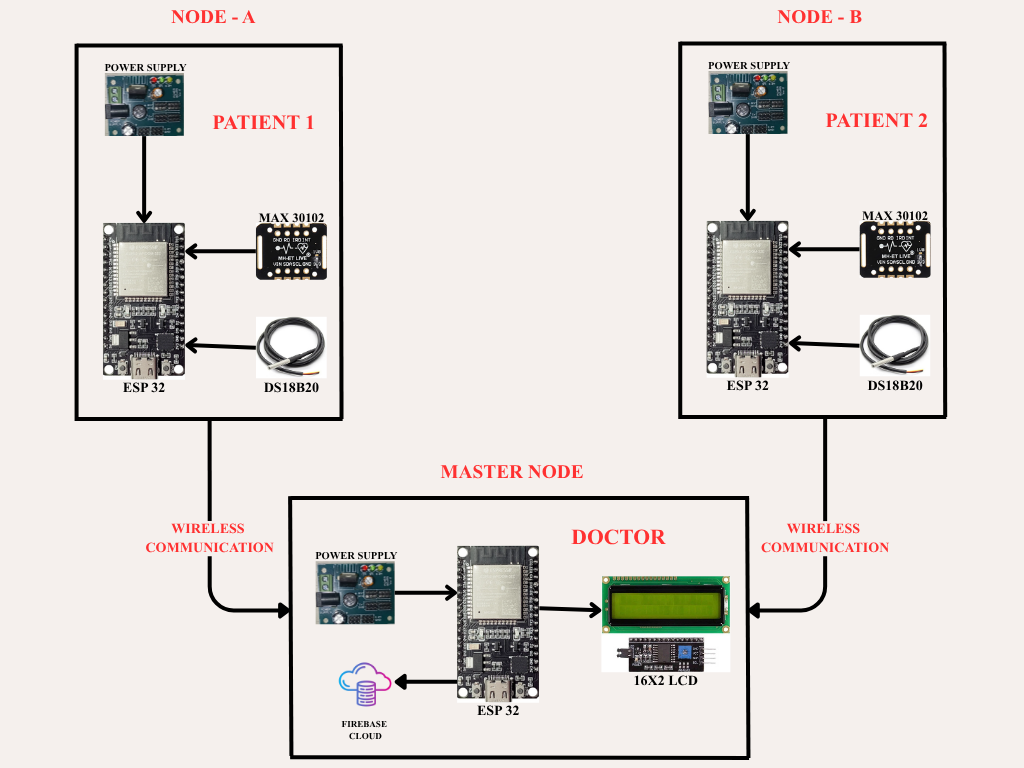
The mainstay of the project is to design a Wireless Sensor Network (WSN)-based health monitoring system using ESP32 nodes for continuous patient data collection.
Introduction:
Modern healthcare systems face critical challenges due to increasing patient populations, limited resources, and the demand for continuous monitoring. In many cases, patients suffering from chronic conditions such as cardiovascular diseases or infections require frequent observation of vital parameters like heart rate and body temperature. However, in overcrowded hospitals and rural clinics, healthcare professionals cannot monitor every patient in real time, often leading to delayed diagnosis and emergency interventions. This situation poses significant social concerns, as delayed treatment directly affects survival rates and quality of care, especially for vulnerable groups such as the elderly and children. Wireless communication technologies have emerged as a promising solution to these challenges by enabling remote and real-time monitoring of patients without requiring continuous physical presence of medical staff. Through such technologies, caregivers can receive timely alerts, reducing manual workload while ensuring that medical assistance is provided before conditions become critical. Beyond hospitals, this approach is equally valuable in rural healthcare, disaster management, and pandemic situations where minimizing physical contact is essential. Thus, the integration of wireless sensor networks into healthcare is not just a technical innovation but a social necessity for improving accessibility, reducing mortality, and ensuring equitable health services worldwide.
Proposed System:
The proposed system is a Wireless Sensor Network (WSN)-based health monitoring framework designed to ensure real-time tracking of vital patient data. It employs three ESP32 microcontrollers, where two act as slave nodes and one serves as the master node. Each slave node is equipped with a heart rate sensor and a temperature sensor, which continuously collect vital readings from patients. Instead of connecting directly to the internet, the slave nodes use ESP-NOW peer-to-peer communication to transmit their data to the master node. The master ESP32 does not have any sensors attached but serves as a sink or gateway node, responsible for gathering all sensor data from the slaves. Once the data is received, the master organizes it into a structured JSON format, ensuring that each patient is correctly identified. The master node then connects to the internet and uploads the aggregated patient data to the cloud for remote access and monitoring. This approach reduces power consumption and minimizes network congestion by limiting internet use to only one node. It also enhances scalability, as more slave nodes can be added easily. Ultimately, this system provides a reliable, cost-effective, and socially impactful method of continuous patient monitoring for hospitals, clinics, and home care.






Reviews
There are no reviews yet.